Expert insight
Power pulsing: Unlocking new value from existing electrostatic precipitators (ESPs)

Expert insight
Power pulsing: Unlocking new value from existing electrostatic precipitators (ESPs)
Airnord specialises in high-performance electrostatic precipitators (ESPs) and ESP upgrades for demanding industrial applications. In this article, Airnord emissions-control specialist Mads Kirk Larsen explains how Coromax® micro-pulse technology can improve the performance of existing ESPs, reducing emissions and power consumption without rebuilding the precipitator,
Discussions on the future of coal-fired power generation are often dominated by long-term transitions such as renewables, carbon capture, phase-out scenarios. But for many plant operators across Asia and other emerging markets, the reality is more immediate and practical: how to run existing assets more efficiently, more cleanly, and more cost-effectively under tightening regulatory and economic pressure.
As Mads Kirk Larsen, one of Airnord’s leading experts in emissions control at coal-fired plants explains, this is precisely where electrostatic precipitator (ESP) upgrades such as power pulsing/micro-pulse technologies are gaining traction.
‘Many existing plants are old, degraded, and facing stricter emission regulations,’ says Larsen. ‘There is a clear need to improve performance – and quickly.’
However, rather than replace entire systems, operators are increasingly looking at retrofit solutions that unlock new value from existing facilities. Viewed through commercial, operational and sustainability lenses, the case for power pulsing becomes significantly broader than emissions compliance alone.
Reframing the ROI equation with micro-pulse systems
In cost-sensitive markets such as India, Indonesia and Turkey, investment decisions are rarely based solely on achieving emissions compliance. The key question is not just whether an upgrade works – but also whether it pays.
This is where micro-pulse power systems stand out. Unlike major ESP rebuilds, which are capital-intensive and time-consuming, micro-pulse systems work by upgrading how energy is applied within the existing structure.
‘ESPs are large and expensive to rebuild,’ Larsen explains. ‘With micro-pulse systems we don’t change the structure – we change the way energy is applied. That’s the key difference.’
This has two immediate commercial implications: lower upfront investment and faster implementation. Indeed, a typical micro-pulse system can be installed during planned outages in just a few days, avoiding costly downtime and lost production.

Up to 50% less power consumption
Micro-pulse technology can significantly reduce ESP power consumption by up to 50%, directly lowering costs. At the same time, improved collection efficiency reduces downstream costs in systems such as wet flue gas desulphurisation (WFGD), where lower dust loads translate into less wear, fewer maintenance interventions and improved byproduct quality that commands higher prices.
One of the most overlooked benefits, however, is fuel flexibility.
‘Plants often have to choose between cheaper coal with higher emissions or more expensive coal,’ Larsen says. ‘With a micro-pulse high-voltage supply solution, they can use cheaper coal and still meet emission limits.’
In volatile fuel markets, this flexibility can translate into substantial annual savings. Even modest efficiency gains – typically in the range of 0.5–2% coal savings – can equate to hundreds of thousands of dollars per year for a mid-sized plant.
Taken together, these factors shift the investment discussion from capex to lifecycle value. For decision-makers, the question becomes not ‘Can we afford to upgrade?’ but ‘Can we afford not to?’
Operational performance without disruption
From an operational standpoint, power pulsing enhances how particles are charged and collected. By applying short, high-voltage pulses, it improves particle agglomeration and helps minimise back corona, one of the key limitations of conventional ESP operation, particularly with the high-resistivity dust produced by coal-fired plants.
The result is more stable and predictable performance across a wider range of operating conditions.
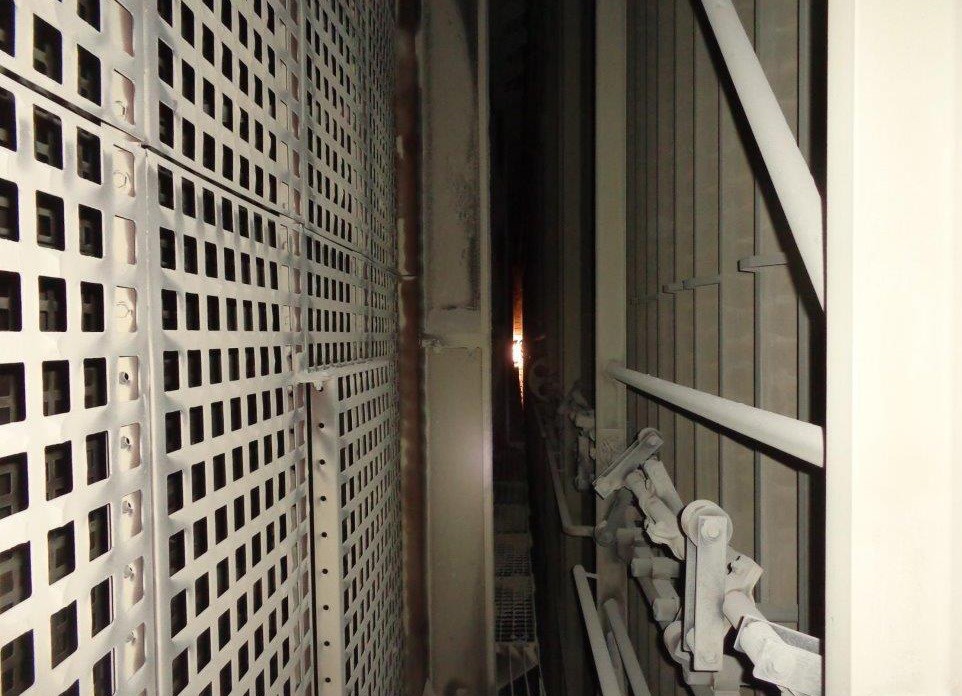
This is particularly relevant in regions where fuel quality can vary significantly. Plants burning low-grade or inconsistent coal often struggle to maintain stable ESP performance using traditional power supplies. Micro-pulse systems, by contrast, are designed to handle a broader range of dust resistivity, improving operational flexibility.
Importantly, the benefits extend beyond the ESP itself.
‘A better-performing ESP improves WFGD efficiency and reduces operating costs,’ Larsen explains. ‘It also improves the quality of the gypsum byproduct, which has significant commercial value.’
This system-level impact is often underestimated. In practice, improving upstream dust collection has multiple positive knock-on effects: it stabilises downstream processes, reduces unplanned maintenance and supports overall plant uptime.
Compared to alternatives such as chemical injection (e.g. SO₃ or ammonia), which introduce ongoing costs and safety considerations, power pulsing offers a simpler, more contained solution.
‘It works, but it also adds cost, complexity, and safety concerns,’ Larsen says of chemical approaches. ‘With a micro-pulse system such as Airnord’s Coromax®, you solve the problem electrically instead – with no need to source, store and manage chemicals.’
For plant operators, this translates into fewer variables, lower operational risk and a more robust baseline performance.
Sustainability benefits: compliance, emissions and beyond
While economics and operations drive most investment decisions, sustainability is becoming an increasingly decisive factor – particularly as emissions regulations tighten across emerging markets.
Here, the primary advantage of power pulsing is straightforward: improved particulate removal.
By enhancing particle charging and collection, micro-pulse systems enable ESPs to capture a greater share of fine particles, including PM2.5, one of the most closely regulated and health-relevant emission categories.
This helps plants meet stricter emission limits without requiring major hardware changes or structural rebuilds.
More efficient SO₂ removal
Improved particulate capture also has indirect environmental benefits. By reducing dust carry-over, power pulsing enhances the performance of downstream systems such as WFGD, supporting more efficient SO₂ removal and lowering the environmental impact of the entire flue gas treatment chain.
There are also implications for mercury emissions. While not a standalone mercury control technology, micro-pulsing contributes by improving the capture of particulate-bound mercury and supporting the oxidation of elemental mercury, making it easier to remove downstream.
‘Mercury is complex,’ notes Larsen. ‘Coromax® helps by improving particle removal and oxidising elemental mercury, making it easier to capture downstream.’
In this sense, power pulsing contributes to a broader, integrated approach to emissions control; one that aligns environmental performance with enhanced operational and economic outcomes.
Power pulsing: the retrofit that’s also a strategic lever
Although power pulsing is well proven and widely adopted – hundreds of Airnord Coromax systems have to date been installed worldwide – barriers to its acceptance remain.
According to Larsen, the main barrier has two aspects: awareness and understanding.
‘Surprisingly many decision makers aren’t even aware of power pulsing. And when they have heard of it, they don’t fully grasp the enormous benefits it offers.’
But once people do understand the basics of the technology, says Larsen, ‘they immediately see the value.’
In a landscape defined by ageing assets, tightening regulations and increasing cost pressure, that value is becoming harder to ignore. For decision-makers, the message is clear: improving ESP performance is no longer just about compliance. It is about unlocking efficiency, minimising emissions, and extending the economic life of existing coal-fired plants.